12-Lead ECG with Cardiology Report
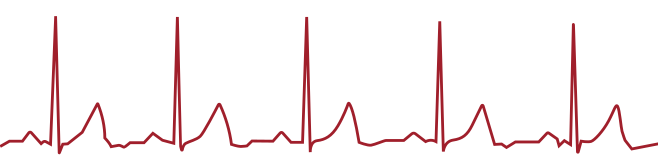
A 12-lead ECG records the electrical activity of the heart. It can identify rhythm disturbances, evidence of previous heart attacks, or other electrical abnormalities.
WHAT TO EXPECT
Electrodes are placed on your chest, arms, and legs. The test takes only a few minutes. The ECG is formally reviewed and reported by a cardiologist.
Holter Monitoring (24–48 hours)
Holter monitoring continuously records your heart rhythm over one to two days. It is useful for detecting intermittent rhythm problems that may not appear during a brief ECG.
WHAT TO EXPECT
You will wear a small recording device for 24-48 hours. The device records your heart rhythm either automatically or when you activate it during symptoms.
Recorded events are reviewed by a cardiologist.
Event Recording (3 - 14 days)
An event recorder monitors heart rhythm over a longer period, helping diagnose infrequent symptoms such as palpitations, dizziness, or fainting.
WHAT TO EXPECT
You will wear a small recording device for the nominated time period. The device records your heart rhythm either automatically or when you activate it during symptoms. Recorded events are reviewed by a cardiologist.
24-hour Ambulatory Blood
This test measures blood pressure repeatedly over a full day and night, providing a more accurate picture than a single clinic reading.
WHAT TO EXPECT
A blood pressure cuff is worn on your upper arm and connected to a small portable monitor. The cuff inflates automatically at regular intervals during the day and night. You return the device the following day for analysis.
Treadmill Exercise Testing
A treadmill exercise test looks at how your heart performs during physical activity. It helps identify reduced blood flow to the heart, exercise-related chest pain, abnormal heart rhythms, or unexplained breathlessness.
WHAT TO EXPECT
Small monitoring electrodes are placed on your chest and a blood pressure cuff is applied. You will walk on a treadmill that gradually increases in speed and incline. Your heart rhythm, heart rate, and blood pressure are monitored throughout. The test usually takes 20–30 minutes and can be stopped at any time if you feel unwell.

PATIENT INFORMATION
What to expect
Heart Conditions
Frequently Asked Questions
OUR TEAM
Anglesea Consulting Suites
Suite 1, 2nd Floor
Anglesea Medical Precinct
Hamilton, NZ
P. 07 957 6080
F: 07 957 6081
E: reception@waikatoheart.co.nz
OPENING HOURS
Mon - Thurs | 8am - 5pm
Friday | 8am - 4pm
Saturday & Sunday | CLOSED
INSURANCE PARTNERS